
In Part 1 of this series, we looked at what's wrong with the way influencer marketing is done today, observing how poor use of data promotes guesswork instead of measurable results.
In Part 2, we revealed how RAD Intel's creative intelligence platform is empowering a new, data-driven way to do influencer marketing, yielding the same type of measurable ROI you'd expect from other types of performance-based marketing.
In this final part of this three-part series, we'll walk you through the steps RAD Intel's uses to put data-driven influencer marketing into action.
What process does RAD Intel use to deliver you measurable influencer marketing results? The overall process breaks down into four main steps which are executed before, during, and after your campaign:
Step One: Campaign Set-upWe start by collecting and analyzing the relevant data to generate the persona insights you need. Our persona insights provide the information you need to optimize your content, match you to influencers, and define influencer deliverables corresponding to your audiences.
Step Two: BenchmarkingNext, we benchmark six months of historical performance data from your social channels and web properties. This lays an objective, solid foundation for comparing your performance with your RAD Intel results.
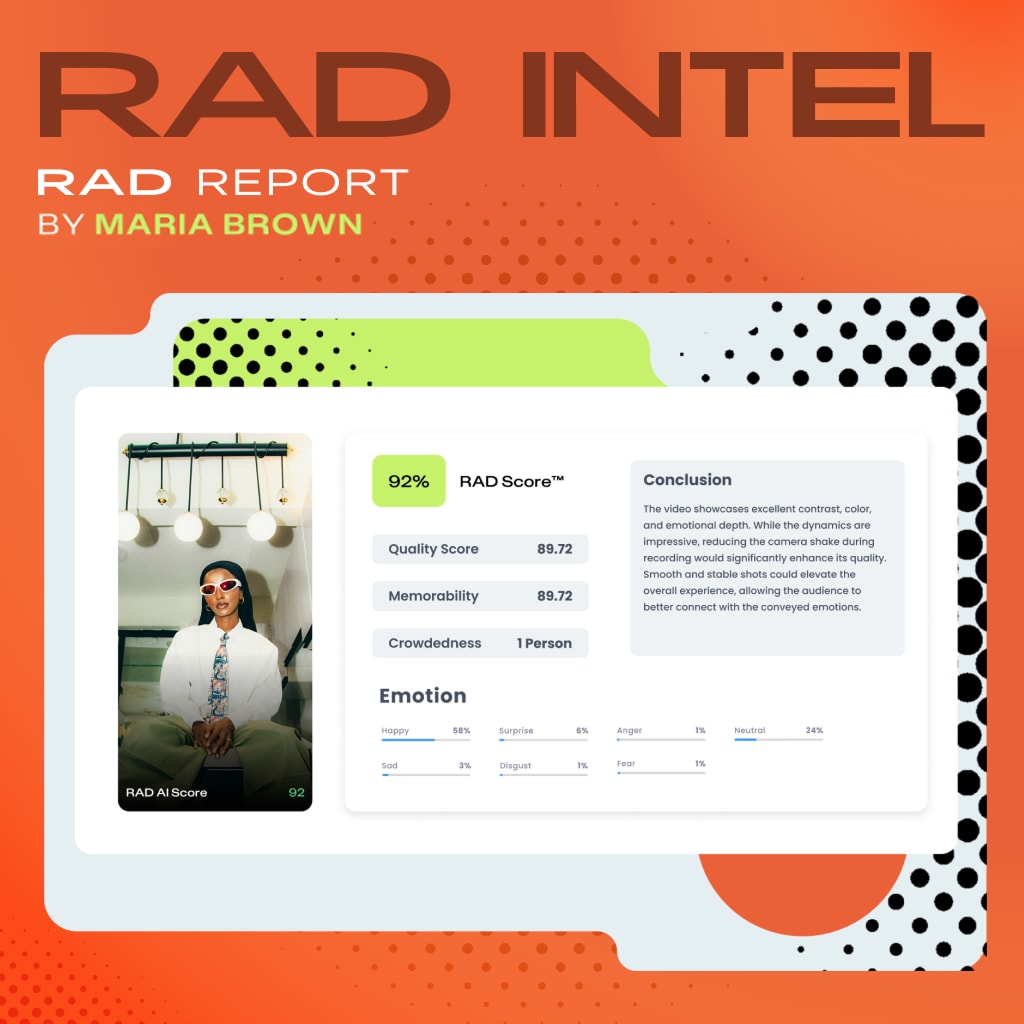
Step Three: Reporting & ImprovementAs your campaign unfolds, our KPI tracking helps you monitor vital indicators such as social engagement, conversions, and follower growth and web traffic spikes. You can see exactly what impact your investment is having on your key numbers.
Our reporting feedback loops empower you to make adjustments which optimize your performance. We provide business intelligence you can apply to improve your paid advertising results, engagement rate and quality, impressions, and reach.
The feedback mechanisms built into our methodology help ensure that your influencer marketing campaigns yield continuous, incremental, steady improvements to your ROI. If you follow our recommendations, you can expect performance in the top 10% of influencer marketing campaigns.
Does It Work? Creative Intelligence Influencer Marketing Success StoriesHow well does the RAD Intel approach to influencer marketing work? As a case study, we reviewed twelve months of performance from our clients in the entertainment industry, one of the industries we serve.
Our study analyzed 397 unique pieces of AI-informed social media content made by 63 different creators. For benchmarking, we compared organic impressions and engagement to results from AI-informed counterparts for four of our clients. The results were decisive and dramatic. For all content, 17.3 million organic impressions generated 640,000 engagements, for an engagement rate of 3.7%. For AI-informed content, 6.8 million impressions generated 754,000 engagements, for an 11% engagement rate. Overall, AI-informed content outperformed benchmarks by a 197% lift. This is one example amongst many case studies. Our client base spans industries ranging from healthcare and eCommerce, to B2B sales and financial services. On average, influencer marketers using RAD AI’s solutions enjoy an ROI lift of 3.7X times their investment for organic, paid, and brand-owned channels. This translates into over 600+ hours of labor saved on per campaign and a 300% savings in content creation costs. As this shows, when you compare AI-informed influencer marketing to old-school performance, the results aren’t even close. Creative intelligence beats manual methods hands-down.
Influencer Marketing ROI - Remove All DoubtOutdated influencer marketing methods leave you guessing about your results. RAD Intel’s next-generation creative intelligence platform removes all doubt about your ROI by combining state-of-the-art artificial intelligence with today’s most extensive range of influencer marketing data. We mine data from Reddit and 600+ API connections. Our comprehensive data scope provides you with 360-degree insight into how to match your target audience with the right influencers, messaging, and content for your campaigns. We provide the information you need to define data-driven goals and benchmarks for your influencer campaigns. Our reporting tools keep your performance aligned with your goals, delivering objective feedback you can apply to improve your KPIs for more impressions, higher engagement, and a more profitable ROI.
We deliver 300% average improvement in productivity and 92% average gains in content efficacy, while doubling ROI for our adopters. Fortune 500 brands like UBS, Condé Nast, and Accenture rely on us to deliver results for their influencer marketing campaigns. Contact us to schedule a demo and see how we can help you achieve your influencer marketing goals.
In Part 1 of this series, we pinpointed what's wrong with the way influencer marketing is done today. We identified how lack of data, skewed data analysis, and tracking the wrong data translates into guesswork instead of actionable business intelligence.Now we'll look at how AI creative intelligence is rewriting the rules by delivering data-driven results.
Introducing Data-driven Influencer Marketing CampaignsThe RAD AI creative intelligence platform is transforming influencer marketing by using content AI technology to deliver actionable insights before, during, and after your campaigns. Bypassing the impasse between automated efficiency and human authenticity, RAD AI combines the best of both worlds.State-of-the-art machine learning optimized for influencer marketing gives you the business intelligence you need to remove bias from creative decisions. Data-driven decision-making and campaign tracking make performance predictable and eliminate unclear results. You get the same quantifiable return on investment you’d expect from pay-for-performance campaigns.
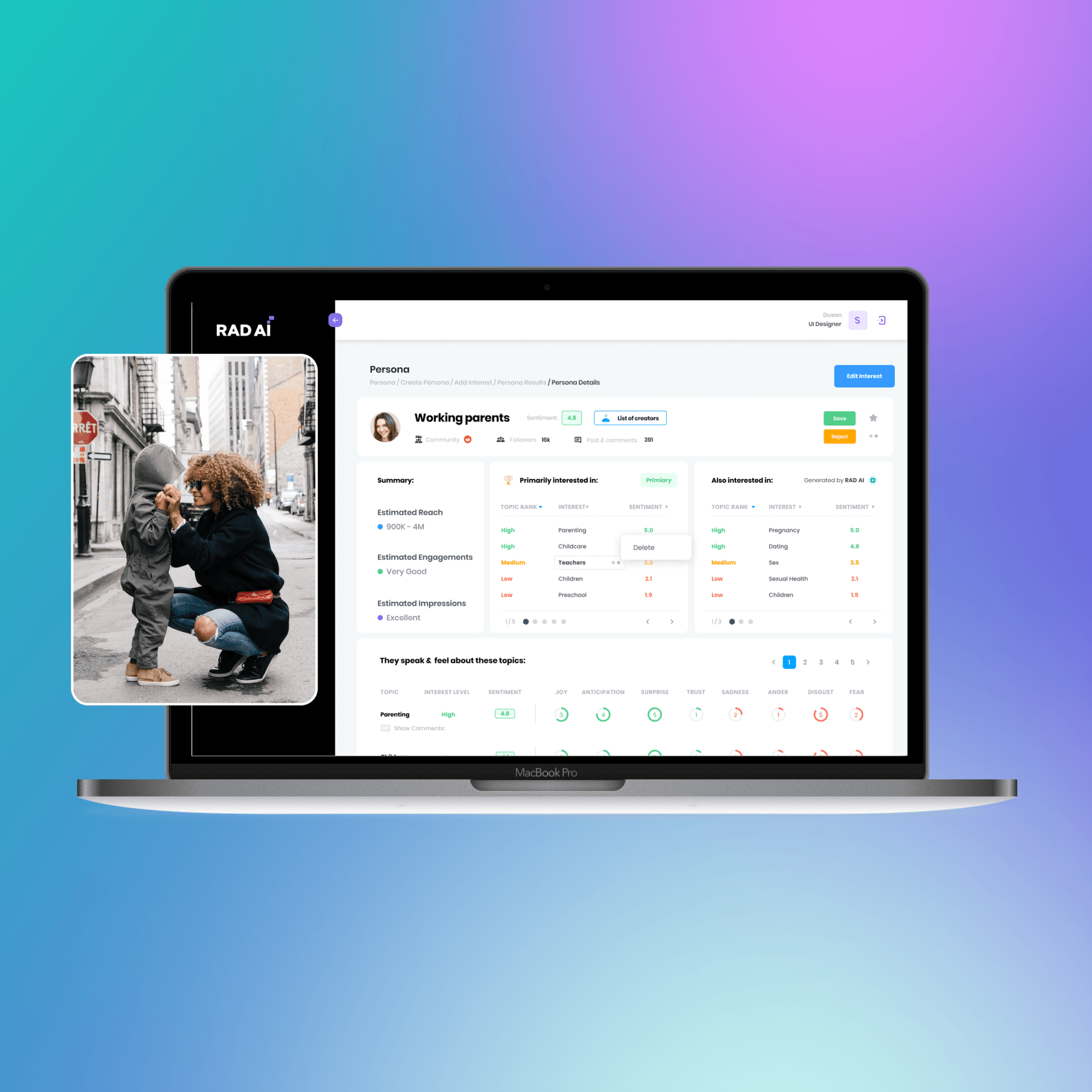
Leveraging Big Data Yields Big ResultsHow does it work? We overcome conventional data limitations by combining data from 600+ API partners. We’re the only AI that uses Reddit for creative intelligence, giving each client a unique glimpse into what authentic audiences and influencers are saying about your industry in genuine, candid conversations. Our other partners include Google/Adobe Analytics, Instagram, Facebook, TikTok, YouTube and LinkedIn- among many others.Our cutting-edge content AI platform is trained to use all this data to develop ideal campaign personas optimized for your market. Through our partnership with Reddit, we’ve pinpointed over 100,000 precisely niched customer personas.For each persona, we identify the dominant interests and sentiments of your target audience and weigh topics by audience using an objective scoring system. Based on this analysis, we match your campaign personas to influencers who fit your audience, using a ranking system that identifies your best influencer options.Our content AI analysis helps you optimize the strategy and language you use to connect with your audience. For example, we recommend which hashtags to use to maximize your performance.To track your results, we benchmark six months of historical performance on your social channels and web properties using relevant KPIs. Performance indicators we track include social engagement, conversions, follower growth, and web traffic. Tracking results get fed into a reporting feedback loop segmented by channel to help you improve your KPI performance.
Influencer Marketing Delivers Measurable ROIThis data-driven approach yields a measurable return on investment for your influencer marketing campaigns. You no longer need to guess what results you’re getting from your influencer marketing spend or what to do to improve your results. Just follow the numbers and do the math.Now that you know how to overcome the limitations of conventional influencer marketing through AI, how do you put a content AI influencer marketing strategy into effect? In the final part of this series, we'll show you how it works in action:Part 3 of 3: Putting ROI-based Influencer Marketing into Effect: Four Steps to Action -
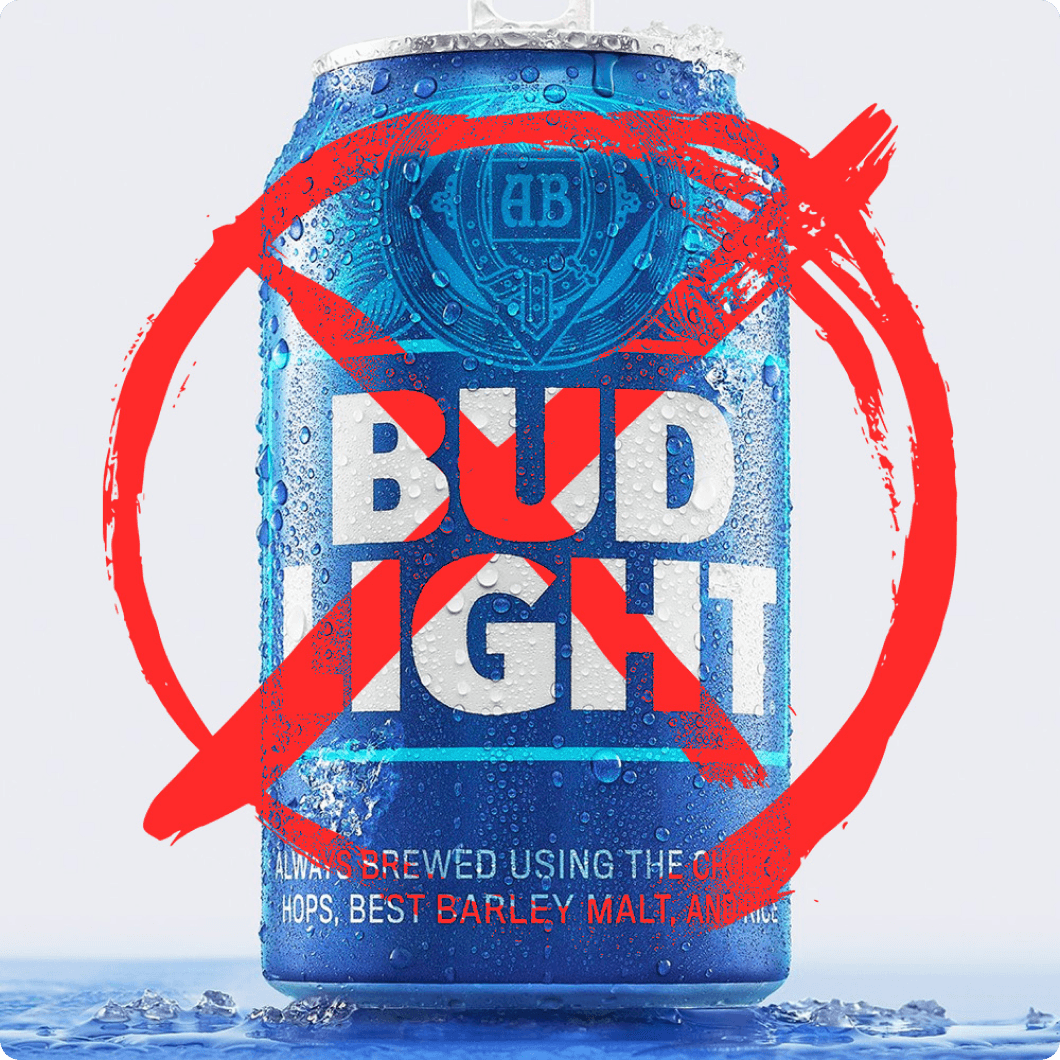
If you want to illustrate why brands need data-informed decisions when doing influencer marketing, you need look no further than the case of Bud Light. Whatever you think of the Dylan Mulvaney controversy, the bottom line for Bud Light parent Anheuser-Busch is $15.7 billion in losses since April 1 and projected annual sales declines of 12% to 13%. In an epic marketing disaster, Bud Light managed first to alienate a significant chunk of its core demographic, then backtrack and anger the same audience it sought to attract in the first place.
But Bud Light's blunder isn't unique, and we don't need to pile on the legacy brand to make the point. The history of marketing is replete with historical and recent examples of companies that have made branding decisions out of touch with their target market. New Coke. Pepsi's Kendall Jenner ad. Star Wars: The Last Jedi. The list goes on.
What Caused Bud Light's Marketing Fail?What causes such colossal marketing disasters? Anonymous sources at Bud Light in crisis management mode have blamed a disconnect between upper management and marketing executives. Bud Light marketing VP Alissa Heinerscheid explained that she sought to attract young drinkers by repudiating what she called the brand's "fratty out-of-touch humor".
Speaking to PR Week, Adam Ritchie of Adam Ritchie Brand Direction observed that Bud Light's failure felt like the brand was trying to take a "shortcut toward trendiness". Peppercomm CEO Steve Cody concurred, saying that Bud Light's temporary trendiness came across as fake, inauthentic "purpose-washing" out of touch with the brand's own purpose and values.
These diagnoses from PR professionals underscore the risks brands face when their marketing teams launch campaigns based on bright ideas uninformed by target audience feedback. Bud Light wanted to attract a younger demographic, but the means it chose to do so alienated actual Bud drinkers as well as young activists unimpressed by impersonations of wokeness. This would not have happened if Bud Light had made more effort to get feedback from actual consumers before launching their campaign. In today's connected culture, that means making data-informed decisions driven by digital input from online audiences.
In this post, we'll show you how using AI to make data-informed decisions can help you avoid mistakes like Bud Light's and enjoy the fruits of successful influencer marketing campaigns. First, we'll look at why marketing blunders like Bud Light's happen and how lack of data contributes to campaign failures. Then we'll explain how RAD Intel uses artificial intelligence to connect audience persona models with the right creative strategies and key opinion leaders to reach your target demographic. Finally, we'll walk you through the process of launching a successful influencer marketing campaign that avoids the types of mistakes Bud Light made.
type: embedded-entry-inline id: gY7vqMpDHHWpUG08FrOBp
How Marketing Blunders HappenBud Light's Dylan Mulvaney marketing disaster replicated mistakes Pepsi made with its failed Kendall Jenner ad campaign, and insights gained from that episode shed light on how these types of blunders happen. The Atlantic staff writer Joe Pinsker spoke to industry insiders and discovered what typically happens.
The process usually begins with a recommendation based on an internal research report, Pinsker learned. For example, a company's research might indicate that Millennials would be a good target demographic to pursue. Seeking to identify what values appeal to Millennials, the research team learns that Millennials identify with social justice activism. Combining these pieces of data, the research team concludes that an activist ad campaign will attract Millennials. (As we'll discuss later, this conclusion is filled with biases and is often incorrect.)
These assumptions get passed on to the brand's marketing agency in the form of a creative brief. Working over a several-month period, the creative team's copywriter and art director brainstorm ideas and share them with the project director. The project director reviews ideas, tosses some out, and selects some for development. Eventually, the director picks their favorite idea and shares it with the rest of their creative agency for feedback and approval.
The approved idea gets passed back to the client for their input. Once the agency and client agree on a final script, a producer gets the production process rolling. During production, the ad may be shown to focus groups for feedback. Finally, the finished ad gets released.
And at that point, if something has gone wrong earlier in the process, the damage is done. The brand, aka "you" are left with inauthentic content, and your audience is well aware of it.
The Bud Light mistake should serve as a crucial reminder for brands and marketers. With the rise of influencers who have amassed large audiences, secondary interest groups have become even more important. This is critical - especially as more and more brands aim to tackle sensitive topics.
Why does, or should we say doesn't this happen?
McKinsey research unveiled personalization as the foremost trend among consumers to foster loyalty within their customer base. This advice from McKinsey applies to both creators and brands. A successful brand should tailor its offerings to a select set of buyer personas, while creators should craft content that resonates with those same personas.
type: embedded-entry-inline id: 2fTUKikqXTP4RkD2u0QGQ
Where Influencer Marketing Campaign Development Goes AstrayWhen the development process described above works correctly, the results can be beautiful. But while the process contains some checkpoints for flagging bad ideas before they move forward, there are several ways mistakes slip through the cracks.
The seeds of disaster may be sown as far back as the research stage. In the above example, the research team combined two pieces of data to reach their conclusion: Millennials would be a desirable target audience. Millennials identify with social justice activism. Therefore, we should do a social justice ad. This was essentially the reasoning underlying Bud Light's campaign as explained by Alissa Heinerscheid.
But while the research team may think this is a logical conclusion, what if the intended Millennial audience doesn't line up with those same conclusions? What if Millennial beer drinkers don't make decisions about beverage consumption based on whether advertisers appeal to social justice activism? What if the Millennial demographic has varying views that don't all fit into one neat box? Or what if other target demographics will respond negatively to an ad that supposedly appeals to Millennials? Unless the researchers are getting feedback from their market on whether their idea is a good idea, they're guessing. And their guesses may be biased, especially if the research team is composed of a different demographic than the audience they're trying to reach.
Another bottleneck in the development process can emerge once the creative team starts using the research team's recommendations to generate campaign concepts. While the creative team may brainstorm many ideas, ultimately, the project director gets to decide which idea will be put into production. Project directors typically rely on intuition and personal preference to make this decision. But if they're not getting input from their intended audience, they’re projecting a personal bias onto their market.
A final checkpoint to catch a potential looming disaster are highly biased, often outdated focus groups. These groups can indeed save the day, but they also can drop the ball. Some members of the group may be afraid to voice objections because of actual or perceived peer pressure. Or the producer or marketing team may ignore and override what the focus group says.
These are some of the vulnerabilities in the influencer campaign development process that create openings for disasters. One thing all these failed checkpoints have in common is reliance on subjective opinion and sentiment instead of hard data.
type: embedded-entry-inline id: 3uAZNWhqxhZXh4NDvdBOEZ
How Lack of Data Contributes to Marketing DisastersConsider how lack of data can create single points of failure at key checkpoints in the development process:
If research teams reach conclusions about what demographics want without actually consulting those demographics, they can pass misguided assumptions on to the creative team. This can set the entire development process off on the wrong foot, setting the stage for failure.
If creative project directors give ad concepts the green light based on their own beliefs and preferences instead of those of their target audience, a campaign can completely misfire. No matter what the rest of the team does, or how clever the copywriters are; no matter how beautiful the art direction, and no matter how professional the production, the most perfectly packaged campaign can fail if it delivers the wrong message to the target audience.
If focus groups don't represent the intended audience, or group members don't speak candidly, or production teams suppress unwanted input, a campaign can end in disaster.
But what happens if you reverse this scenario by injecting key data at critical points in the development process?
What if research teams check their conclusions against actual audiences before passing them on to creative teams?
What if creative project directors check their preferences against actual audience preferences?
What if focus groups get feedback from a well-selected audience sample having authentic conversations about their candid opinions?
If you make these adjustments, now you have research teams passing on accurate information to creative teams. Now you have creative project directors making data-driven decisions guided by objective market research. Now you have production teams getting the opportunity to fine-tune their final productions based on what audiences actually like. Now you have a recipe for success.
This sounds great in theory. But putting these insights into action is complex at best.
How RAD INTEL Delivers Persona-based Influencer MarketingRAD Intel has developed the industry-leading standard for KOL/influencer marketing that keeps marketing campaigns aligned with their target audiences and prevents disasters. With over 600 API-based data connections, including Reddit, we provide unparalleled access to authentic conversations that ultimately match creative strategy to audience targets. This results in unbiased influencer marketing powered by artificial intelligence alongside a continuous feedback loop informed by data.
How does it work?
We take a step-by-step approach that starts with AI-informed audience personas that illuminate creative strategies and influencer selections.
Step 1: Establish Data-based Goals and BenchmarksDuring our discovery process, your client success manager trains our AI on your performance goals. Our onboarding process ingests your historical performance data from social and brand-owned channels to establish measurable benchmarks and quantifiable performance goals.
Step 2: Develop AI-informed Persona Models for Audience IdentificationUsing the data from 600+ API connections and Reddit, we identify the dominant interests and topics your target audience persona is talking about. Expanding on this, we identify secondary and overlapping interests your target customer cares most about. This process provides our clients with AI-informed persona models for optimal audience identification and messaging strategies. There's no need to guess what your audience wants because we know. This information is unbiased and if used properly, ensures the optimal messaging strategy for your target customer.
Step 3: Connect Persona Models to Creative StrategiesNext, your AI-informed persona models are used to guide the creative strategy for your target audience. Connecting your campaign objective to who your target persona is, we identify what interests your audience cares about, as well as where and when you should distribute content to reach them. We help you understand exactly why and how to connect with your audience.
Step 4: Identify the Right InfluencersWith your target persona and optimal strategy defined, our AI platform is able to match influencers and key opinion leaders who fit your audience by persona. Our AI identifies the top 1% of KOLs and influencers who match your campaign criteria. Based on our findings, we provide AI-informed recommendations for approval. We work with you to identify evangelists that authentically align with your target customer persona and campaign strategy.
Step 5: Using your Performance Data to InformAfter you launch your campaign, we use ongoing performance monitoring to make sure you stay aligned with your audience. Through ongoing tracking, reporting, and optimizations, we ensure each client continually achieves their intended goals. In short, we ensure our clients don't end up with a marketing misfire like Bud Light.
How a Successful Influencer Marketing Campaign WorksThe RAD Intel way is a methodology powered by industry-leading artificial intelligence, designed specifically for influencer marketing.
1 AI delivers the optimal audience persona, content strategy
2 AI matches talent recommendations by persona and content strategy for approval
3 We handle everything including, contracting, content rights and campaign deliverables
4 Client control accepting and rejecting influencers including content revisions
5 We handle quality assurance which includes; reviewing content at scale, managing asset distribution, integrating content with brand and social channels and adapting content for paid amplification
Simply put, our clients rely on our data sources and AI-powered persona models to eliminate uncertainty when making campaign decisions. Witness the power first-hand with a live demo today.
The TikTok algorithm creates viral moments using a different methodology than other social networks. If you use the same influencer marketing tactics on TikTok that you use on Facebook or Instagram, you are following a formula for failure.
To succeed on TikTok, you need to know what's unique about TikTok's algorithm, what influences your results, and what doesn't work.
RAD Intel has invested in learning what makes TikTok tick so we can develop high-quality, high-performing creative strategies for our clients and deliver them winning influencer marketing campaign results. Our insights into TikTok's algorithm are informed by over 600 API connections, including our unique partnership with Reddit that lets us see what authentic user discussions there are saying about TikTok content and influencers. We've analyzed over five billion data points to pinpoint what goes into making TikTok viral moments. Here we'll share what we've learned and how it can benefit your TikTok influencer marketing campaigns.
In this post, we'll explain how the TikTok algorithm works and how to put it to use to achieve effective KOL influencer campaigns. First, we'll look at what TikTok's own CEO has said about what makes the TikTok algorithm different from reigning social media models. Then we'll break down what the algorithm factors in when calculating your results, as well as what doesn't count. We'll distill three key ingredients that go into achieving viral results on TikTok. Finally, we'll share the seven-step approach RAD Intel uses to leverage TikTok's algorithm and turn data intelligence into high-performing creative campaigns that deliver measurable ROI for our clients.
What Makes the TikTok Algorithm DifferentTikTok's formula for serving content to users follows a different paradigm than what other social media networks use and what most influencer marketers are used to. TikTok CEO Shou Zi Chew discussed what makes the TikTok algorithm different in a recent TED Interview.
Chew explained that TikTok was inspired by reinventing the way content was displayed. When Chew and his partners first conceived the idea of TikTok about a decade ago, most social media networks displayed feeds and suggested content based on social graphs of who you knew. TikTok's designers decided to try a different approach by displaying content based on what you like.
How TikTok's Vision Inspired Their AlgorithmFrom this initial inspiration, TikTok developed a vision of user experience centered around three key goals:
1 Providing a window for users to discover enjoyable content
2 Supplying a canvas for users to be creative
3 Building a bridge for users to connect
To achieve these goals, TikTok developed an algorithm which uses machine learning to determine and display what users like by analyzing interest signals such as views, likes, and shares. Chew explained that this represented a different approach to serving content than prior apps. Search engine apps were built to help users find content by entering keywords. Social media apps use social graphs to connect people to networks. In contrast to apps that serve content based on searches or social graphs, TikTok serves content based on a machine learning analysis of what users like.
Illustrating the TikTok Algorithm in ActionChew illustrated how the algorithm works with a simplified example of three different users and six different videos. The first user liked videos 1 through 4. The second user liked videos 1 through 3 and 5. The third user liked videos 1 through 3 and 6. From this, the algorithm detects that people who like videos 1 through 3 have a certain likelihood of also liking videos 4, 5, and 6.
Based on this, the algorithm will show videos 4 through 6 to all three users who liked videos 1 through 3.
TikTok uses machine learning to repeat this formula at scale by factoring in much more data for more granular personalization. The basic principle is that if two people both like certain content, there is a certain probability that each of them will like additional content liked by the other party. TikTok applies this principle at scale by using data from billions of users engaging content in real time.
Interest Signals Speak Louder Than WordsChew added that TikTok also differs from other social networks because it relies on interest signals rather than asking twenty questions about your interests and whether you like a piece of content. The content you see is determined organically by interest signals. What you watch, what you like, and what you share provides TikTok with the interest signal data it uses to analyze what you like. Based on this input and certain other variables, the algorithm uses AI-based pattern recognition to match you to content you're likely to like.
What Influences Your TikTok ResultsChew's interview emphasized the importance of interest signals in influencing how TikTok content gets displayed. A more complete perspective on TikTok's algorithm factors in additional variables - let's unpack.
We can break the elements that influence TikTok results down into three major categories:1 Interest signals and non-interest signals
2 Video and audio content
3 Device and account settings
Here's what each category includes with respect to interest and non-interest signals:1 Views
2 Completions
3 Re-watches
4 Likes
5 Shares
6 Follows of accounts
TikTok also places weight on signals that you're not interested in content, including:1 Videos you've skipped
2 Videos you've marked that you're not interested in
3 Filtered keywords
4 Users you've blocked
TikTok's recommendation engine uses these types of non-interest signals to exclude content from your feed. Additionally, TikTok avoids displaying duplicate content on For You Page recommendations, and it restricts recommendations of videos on certain subjects deemed problematic.
Video and Audio ContentTikTok's algorithm analyzes characteristics of the content you engage. Important elements include:
1 Captions
2 Text overlays
3 Hashtags
4 Sounds
5 Effects
6 Transcripts
Trending audio plays a special role in TikTok's algorithm. The TikTok recommendation engine notes when content is attached to a trending song or sound.
Device and account settingsThe TikTok algorithm uses key user information to help it recommend content which include type of device, location settings and language preferences.
These above factors receive lower weight than interest signals and content characteristics, but they help TikTok determine the relevance of users with different devices and users from different areas and language groups.
What the TikTok Algorithm Doesn't DoWhat the TikTok recommendation engine doesn't factor in (also is important to note). As Chew emphasized, TikTok doesn't show content based on network graphs. It's not who you know, it's what you like. But TikTok is working on making your network an important factor soon.
TikTok doesn't make recommendations based on how many followers a user has. Your content can get recommended even if you only have a few followers.
TikTok doesn't recommend content based on the performance of your previous videos. Even if few people watched your last video, your next video could go viral.
Three Keys to Making the TikTok Algorithm WorkWhat does all this imply about what it takes to achieve viral momentum on TikTok?
The platform's emphasis on what audiences like gives us a starting strategy for TikTok viral marketing that can be used across several disciplines. Let's unpack the these strategies based on knowing what your audience likes, delivering engaging content your audience will like and connecting with the KOLs your audience likes.
These steps are interconnected. Knowing what your audience likes tells you what type of content you should be posting to engage them. Knowing which KOLs your audience likes tells you which influencers you should partner with to get your content seen and by your intended viewers. Bringing all three of these ingredients together gives you a recipe for reaching the right audience with the right content through the right influencers.
But how do you get the data you need to identify your target audience's likes, your optimal content strategy, and your optimal influencers? That's where RAD Intel's data intelligence comes in.
How RAD INTEL Leverage the TikTok AlgorithmRAD Intel puts TikTok's algorithm to use for our clients by providing the data and methodology needed to make informed decisions about audience, content, and influencer selection. We draw data from over 600 API connections, as well as our client's historical data. Armed with this data, we help our clients match measurable campaign goals to the right TikTok audiences, content, and KOLs to achieve them. Our method can be summarized as a seven-step process:
1 Defining data-driven goals and benchmarks
2 Developing AI-informed audience personas
3 Matching markets to creative strategies
4 Identifying optimal influencers
5 Onboarding influencers
6 Activating campaigns
7 Optimizing campaign performance
Here's How Each Step WorksHere are some straightforward steps that marketing teams can take to initiate action. Starting with a data-driven strategy can be a reasonable first move, as we have observed organizations achieve positive results when implementing this approach to support their TikTok marketing efforts. Conversely, we've also witnessed mediocre outcomes when recommendations are not integrated into the company's marketing culture due to a lack of intentional processes.
1. Define Data-driven Goals and BenchmarksGuided by client success managers, our clients begin their journey to TikTok success with a discovery process that helps them identify measurable campaign performance goals. For example, a client might seek to achieve a certain number of views, likes, or videos using the campaign hashtag.
With well-defined goals in mind, our onboarding process develops KPI-defined benchmarks, project plans, and timetables to guide our client's campaign. To select suitable benchmarks, we connect our AI-powered influencer marketing platform to your brand-owned and social media channels to draw from historical data. This steers you toward data-defined, measurable, achievable performance goals.
2. Develop AI-informed Audience PersonasTo help our clients reach TikTok audiences who match their campaign goals and target markets, we use our API and AI capability to help develop precisely defined audience personas. We draw from over 26 million daily active Reddit user conversations and other select API sources to discover what interests engage your target audience. We identify both dominant interests as well as secondary and overlapping interests that refine your audience persona targeting. After suggesting personas based on our research, we obtain your approval before proceeding to the next step.
3. Match Your Market to Your TikTok Creative StrategyWith your target audience and their interests defined, we help you identify the ideal TikTok creative strategy for your campaign. Based on who your persona-defined audience is and what their interests are, we help you identify what type of content to engage them and where and when to deliver it.
4. Identify Your Optimal TikTok KOL InfluencersAfter identifying your ideal creative strategy, we proceed to match you with the best key opinion leaders and influencer partners to implement your strategy. Using AI, we match your campaign objective, audience persona, and content strategy to the top 1% of influencers and KOLs meeting your criteria. With your approval, we help you select prospective influence partners.
5. Onboard Your InfluencersOnce we've identified influencers that match your campaign strategy, we help you connect and collaborate with them. With your approval, we secure and contract your influence partners. Through our platform, your partners can collaborate with you. We help you communicate project requirements to content creators and establish due dates. Your partners can upload content for your review and approval. We help you review content to make sure it means your brand guidelines as well as FTC regulations. Our platform makes it easy for your to review content at scale and publish approved projects through integration with TikTok as well as Facebook, Instagram, Snap, Twitter, and all paid ad managers.
6. Activate Your CampaignOnce you've approved your influencers' content, we activate your campaign. Your content goes live on your campaign's designated brand-owned and social media channels. Through our platform, you can monitor your campaign results for complete transparency on your performance and ROI.
7. Optimize Your PerformanceAfter your campaign goes live, we help you optimize your performance to ensure you achieve your target objectives and realize a return on investment. We use a suite of AI-based insights to track KPIs such as hashtag insights, content impact by channel, sustained follower growth rate, sustained engagement rate, and correlation of your web traffic with influencer content. Based on campaign performance, we recommend mid-flight optimizations to bring your results in alignment with your goals. Our platform lets you make batch optimizations for efficient management of your campaign.
Our method delivers proven, guaranteed results. In one case study, an entertainment industry client saw a 197% lift in engagement rate, with 397 pieces of content created generating 6.8 million impressions and 754,000 engagements powered by our AI. We've delivered these types of results across multiple industries, from healthcare and ecommerce to hospitality and visual art. Our track record enables us to guarantee our results. We deliver our clients the same predictable ROI you would expect from other paid marketing channels.
Put TikTok's Algorithm to Work for Your BrandWhen you know what makes TikTok tick, you can put TikTok's algorithm to work building your brand. TikTok's emphasis on interest signals allows you to achieve virality by delivering content matching your audience interests. RAD AI data intelligence on your audience and their interests provides the information you need to align your content perfectly with your intended audience and find the right partners to make sure your content gets seen.
View a demo or contact our team to discuss how we can help you achieve TikTok influencer marketing results.
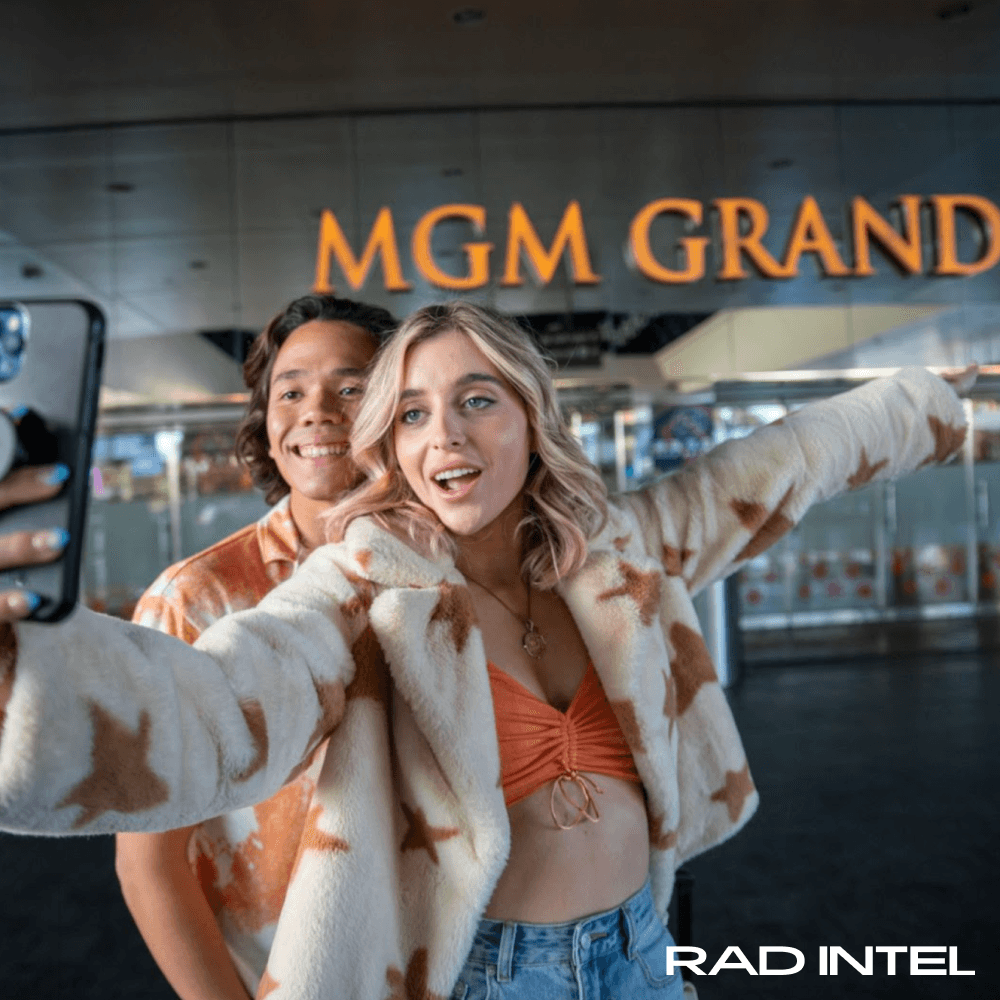
The Las Vegas market, like society as a whole, is undergoing an unprecedented acceleration of diversification, and the smart travel and resort companies understand that this isn’t something to be avoided, but something to be embraced. According to recent census data, in addition to being younger, visitors to Las Vegas were more diverse. About 56% of 2021 visitors were white, down from 2016 to 2019 results, which ranged from 69% to 77%. In 2021, about 19% of visitors were Hispanic, 17% in 2021 were African American and 6% were Asian.
But there’s an elephant in the room. In order to succeed in this modern and challenging marketplace, a brand must be authentic. No one likes BS in marketing, especially when it comes to something as real as creating narratives for a diverse audience.
RAD Intel was chosen for this delicate assignment because we have a secret weapon – the world’s first AI built to understand emotion. When it comes to ensuring authenticity in brand campaigns, we know how to crush it every time. We've trained our models to understand the relationship between content authenticity and campaign ROI. This campaign was designed to highlight our client’s sincere commitment to representing itself as a welcoming resort that has an array of experiences guests can enjoy. Promulgating an inclusive message wasn't just the principled thing to do, it was also good for business. RAD Intel started pre-campaign by using our AI to develop persona data representing audiences that enjoy everything Las Vegas has to offer. With the push of a button, Our AI was able to read hundreds of millions of pages of relevant information for the campaign objective. The case study can be viewed here.
What we did: Examples of RAD INTEL AI-Informed content"Good marketing executives try and figure out how their customers think. The masters succeed in capturing their customers’ hearts."
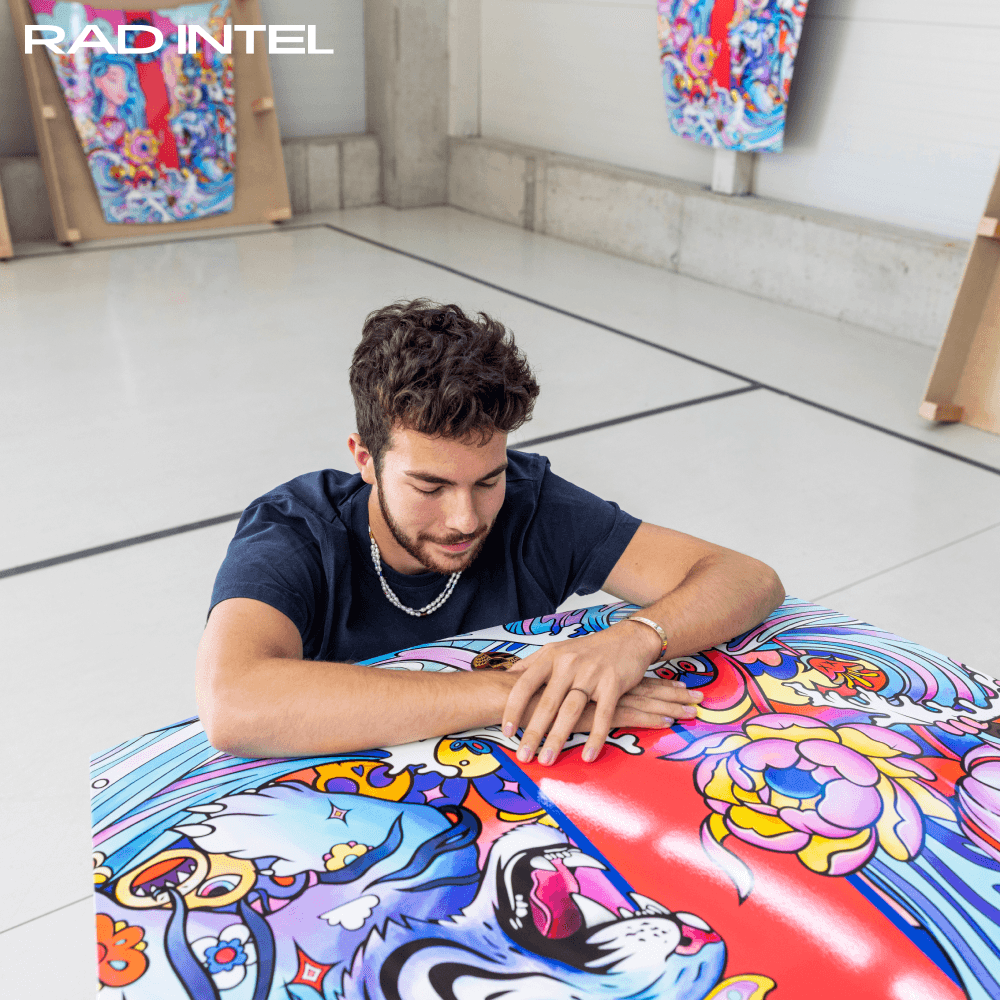
RAD Intel is proud to announce we're launching a new, first-of-its-kind product, RAD Visual Arts, in partnership with LNDMRK, today's most elite visual art agency.
Famed as the producers of Mural, the world's largest street art and music festival, LNDMRK counts partners like Apple, Nike, and Porsche among its clients. Now we're partnering with them to combine their best-in-class visual arts marketing services with our industry-leading ROI-based influencer technology.
By bringing together the best of visual art marketing and the cutting edge of innovation in influencer marketing, RAD Visual Arts provides our clients with unprecedented opportunities to leverage the power of visual media. RAD Visual Arts lets brands collaborate with best-in-class creatives to develop unique products, cultural moments, content, and community. Read on to learn how RAD Visual Arts can bring your brand an entirely new dimension of cultural activation by turning your marketing into world-class art.
Courtesy @Gawx Art and @NordVPN
Differentiating Brands That Care about AuthenticityAuthentic brands are who they say they are. Their company values, passions, and vision shine through everything they say and do, from their advertising campaigns to their products, to the way they treat their customers. They don't say one thing and do another. Their customers know they're real, not fake.
Authenticity is a vital ingredient for influencer marketing success. Influencers have large followings because their customers share their passion, identify with them, and trust them. This trust carries over to brands they partner with. When an authentic influencer endorses a product, their followers value their recommendation.
But when authenticity is lacking, so is the value influencers offer to their partners. If audiences don't trust an influencer, mistrust is going to carry over to your brand. Without authenticity, influencer marketing will backfire. RAD Intel has partnered with today’s most forward thinking brands, partners and visual artists to cultivate authenticity through authenticity. Our collective extensive knowledge of the global art scene provides provides unparalleled access to today's most in-demand artists, producers, and creatives---Key Opinion Leaders like:
Vexx
(3M+ YouTube followers)
Miryam Lumpini
(311K Instagram followers)
Gawx
(2M YouTube followers)
Each of these artists has large numbers of loyal followers that eagerly await their next creation. Through our first of it’s kind partnership with LNDMRK, we help artists and brands meet this anticipation by promoting custom, one-of-a-kind art integrations, delivered via brand specific marketing campaigns.. No two programs are the same, with each production expressing the uniqueness of each artist and brand. This makes each artistic production an authentic, unique creative event which is both culturally significant for communities and financially profitable for brands.
Courtesy @DonnaAdi and Nestle
AI-backed Visual Art Delivers ROI with Creative IntelligenceHow do we make a best-in-class approach to visual art marketing even more effective? By optimizing it with artificial intelligence. Through our RAD Visual Arts partnerships, cultural moments now meet data science.
RAD Intel is bringing visual art marketing the same data-driven ROI standards we've introduced to other segments of influencer marketing. Before RAD Intel revolutionized the industry, decisions in influencer marketing were based on intuitive guesswork rather than objective data.
In contrast to other paid advertising media, influencer marketing has suffered from a lack of standardized key performance indicators, data collection guidelines, and analytics tools. KPIs vary widely from platform to platform, leaving results open to subjective bias. Data from one platform may be oversampled, while relevant data from other sources is overlooked. Inconsistent measurement standards and biased data inputs skew data analysis and yield misleading results.
Because of these limitations, decisions about influencer selection, audience niches, and content strategy often end up being based on incomplete data sets. Unscrupulous marketing agencies and influencers take advantage of this situation, showcasing irrelevant KPIs that don't translate into real ROI.
RAD AI puts an end to this by bringing data-driven standards to ROI-based influencer marketing. Our proprietary AI platform uses over 600 API connections to deliver unbiased creative intelligence that informs campaign concepts, content production and influencer selection. This yields better ROI across the entire marketing mix in a transparent, scalable manner.
Our commitment to authenticity begins with our API partner Reddit. As most of us know, Reddit prioritizes authentic conversations between real people sharing their honest experiences, opinions, and feelings. This makes Reddit particularly relevant for marketers looking to better understand target audiences and the messaging they care about most. . Reddit is one of the 600+ API connections we use as a resource for actionable creative intelligence. Some of our other partner connections include Google Analytics, TikTok, Meta, Twitch, YouTube and more.
Our cutting-edge AI and analytics methods pinpoint the information most relevant to our clients and their campaign goals. This enables us to make customized, data-based recommendations about which audiences to target, what type of content strategy to use, and which influencers to work with. We update our recommendations in real time as campaigns unfold to reflect new information coming in.
This data-driven approach yields predictable results and measurable ROI. We guarantee our results because we know the decisions we recommend to clients are based on data, not guesswork. Our innovative approach transforms influencer marketing from an intuitive campaign decision into a measurable, ROI-based science.
Courtesy @RicardoCavolo
Bringing ROI-based AI Together with Best-in-class Visual Art MarketingWhat do you get when you bring a data-driven approach to influencer marketing together with world-class visual art marketing? By combining these two winning ingredients, RAD Visual Arts helps marketers apply ROI-based decision-making to the world's most talented visual artists.
Marketers can now:
Define campaign objectives in terms of measurable KPIs
Pinpoint ideal audience personas by drawing data from over 600 APIs
Identify which world-class visual artist is ideally suited for your target audience
Determine which content perfectly match your audience's preferences Work with world-renowned visual artists to develop unique, authentic artistic creations that get audiences excited about your brand
Benchmark your campaign performance against historical benchmarks
Optimize your campaigns by incorporating audience feedback
Optimize your visual influencer marketing spend based on measurable results
In short, you no longer have to guess which visual artists to partner with, which audiences to target and what type of content to create.
Marketing as Art: Creating Cultural Moments and Communities through Collaborative ContentBy applying AI-informed creative intelligence to visual art marketing, RAD Intel Visual Art gives marketers the keys to unlock the power of art for their brand. Marketing campaigns now become cultural moments that build communities around shared values and passions expressed through unique products and content.
We are here to help you set up your next cultural moment while meeting your campaign goals and KPIs. Contact us to talk about how RAD Intel Visual Arts can help you harness the marketing power of best-in-class art and AI.